


Introduction
“ukulele history“, The ukulele is one of the most recognizable and cheerful musical instruments in the world. Known for its bright sound, compact size, and easy-to-learn nature, the ukulele has won the hearts of musicians across generations. While many people associate it with Hawaiian culture, the story of the ukulele history is much deeper and more fascinating than most realize.
Understanding ukulele history helps us appreciate how this small instrument traveled across continents, evolved over time, and became a global musical phenomenon. From its Portuguese roots to its Hawaiian transformation and worldwide popularity, the ukulele’s journey is a remarkable example of cultural exchange and musical innovation.
In this article, we will explore the complete history of the ukulele, its origins, development, cultural significance, and its place in modern music.
The Origins of the Ukulele
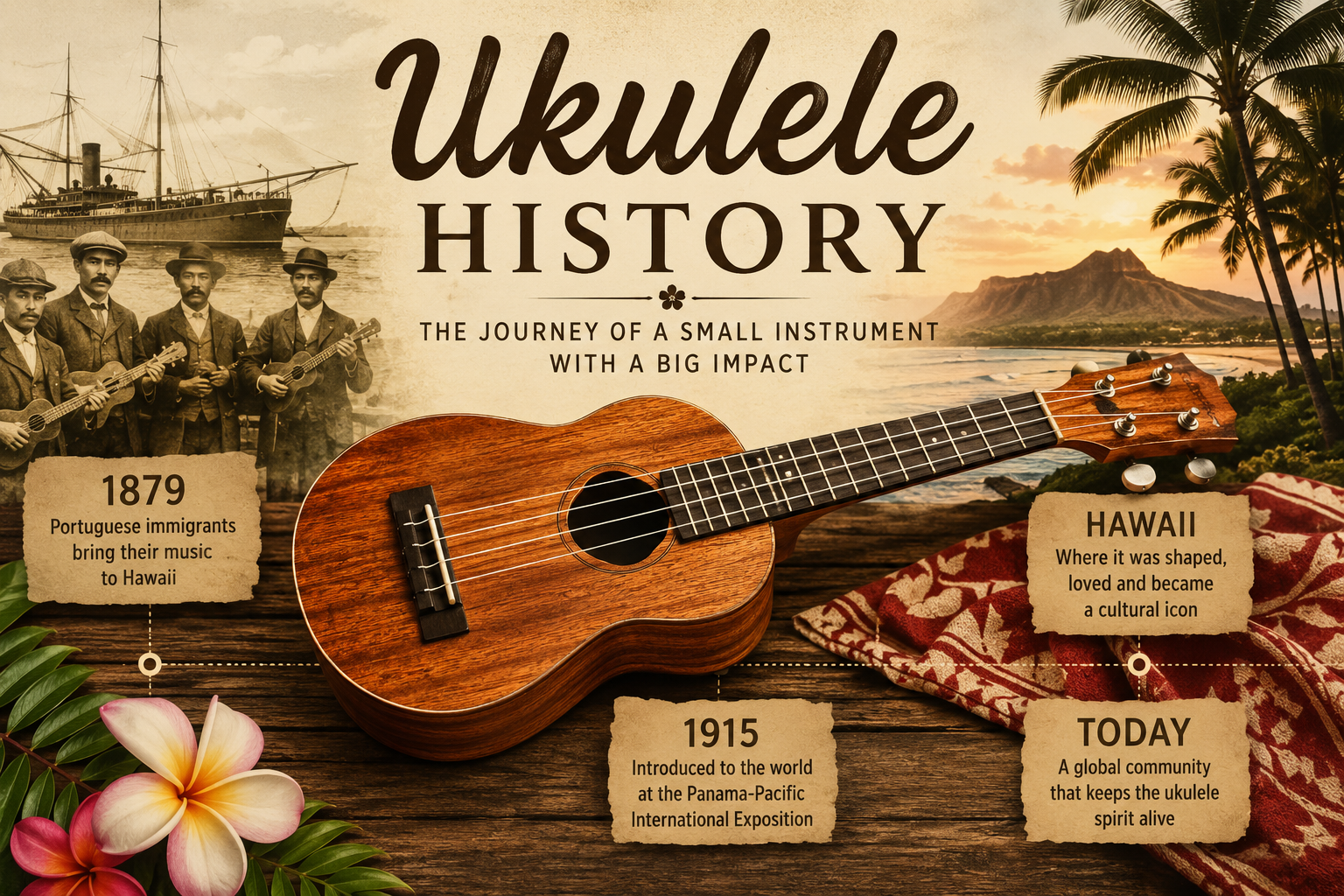
The story of the ukulele history begins long before it became associated with Hawaii. Its roots can be traced back to Portugal during the 19th century. Portuguese immigrants brought a small string instrument called the “machete” or “braguinha” to Hawaii. These instruments were popular in the Madeira Islands and were often used in folk music.
ukulele history In 1879, many Portuguese laborers arrived in Hawaii to work on sugar plantations. Along with their belongings, they carried their musical traditions and instruments. One immigrant named João Fernandes reportedly entertained locals by playing a small guitar-like instrument shortly after arriving in Honolulu. The lively sound immediately captured attention.
Hawaiians quickly embraced the instrument and began adapting it to fit their own musical culture. Local craftsmen modified its design, and Hawaiian musicians incorporated it into traditional songs and performances. This transformation marked the birth of what we now know as the ukulele.
How the Ukulele Got Its Name
One of the most interesting aspects of ukulele history is the origin of its name. The word “ukulele” comes from the Hawaiian language and is commonly translated as “jumping flea.”
There are several stories behind this unique name. The most popular explanation suggests that the rapid finger movements of musicians looked like fleas jumping across the strings. Observers were fascinated by the speed and agility required to play the instrument, leading to the colorful nickname.
Another theory links the name to a Hawaiian court official who was nicknamed “Ukulele” because of his energetic personality. While historians continue to debate the exact origin, the “jumping flea” explanation remains the most widely accepted.
Regardless of its precise meaning, the name perfectly captures the playful and energetic character of the instrument itself.
The Role of Hawaiian Culture in Shaping the Ukulele
Although the ukulele originated from Portuguese instruments, Hawaiian culture played the most important role in shaping its identity. Once introduced to the islands, local craftsmen and musicians began customizing its design and musical style.
Hawaiian royalty helped elevate the instrument’s status. King Kalākaua, often referred to as the “Merrie Monarch,” was a strong supporter of Hawaiian arts and culture. He encouraged music, dance, and cultural preservation, allowing the ukulele to flourish within Hawaiian society.
The instrument soon became a staple of Hawaiian celebrations, family gatherings, and traditional performances. Its bright, warm sound complemented Hawaiian singing and hula dancing perfectly. As a result, the ukulele became deeply connected with the cultural identity of the islands.
By the end of the 19th century, the ukulele had become one of Hawaii’s most beloved musical instruments.
The Ukulele’s Rise to International Fame
The ukulele remained largely a Hawaiian instrument until the early 20th century. Its introduction to international audiences occurred through exhibitions and cultural performances that showcased Hawaiian music to the world.
A major turning point came during the Panama-Pacific International Exposition held in San Francisco in 1915. Hawaiian musicians performed for visitors and demonstrated the unique sound of the ukulele. Audiences were captivated by the instrument’s cheerful tone and portability.
Following the exposition, interest in Hawaiian culture surged across the United States. Music publishers began printing ukulele arrangements, and manufacturers started producing instruments on a larger scale. The ukulele quickly became a popular household instrument.
By the 1920s, the ukulele had become a major part of American popular music. Its affordability and ease of learning made it accessible to people from all walks of life.
The Ukulele During the Jazz Age
The 1920s and 1930s are often considered a golden era in ukulele history. During the Jazz Age, musicians embraced the instrument as both a rhythm and accompaniment tool.
Many jazz performers used the ukulele in recordings and live performances. Its bright tone blended well with emerging musical styles, making it a favorite among entertainers. Music stores sold thousands of instruments, and instructional books became widely available.
The ukulele also gained popularity in schools and community music programs. Because it was easier to learn than many larger string instruments, teachers often recommended it to beginners.
This widespread acceptance helped establish the ukulele as more than just a Hawaiian novelty. It became a respected musical instrument in its own right.
Decline and Revival of the Ukulele
Like many musical trends, the popularity of the ukulele experienced ups and downs over the years. After World War II, larger instruments such as electric guitars began dominating popular music. As rock and roll gained momentum, the ukulele faded somewhat from the mainstream spotlight. ukulele history
However, it never disappeared completely. Hawaiian musicians continued preserving its traditions, and dedicated enthusiasts kept the instrument alive through local performances and educational programs.
The ukulele history experienced a significant revival in the late 20th century. Artists such as Israel Kamakawiwoʻole introduced the instrument to new audiences through memorable performances and recordings. His rendition of “Somewhere Over the Rainbow” became especially influential and showcased the emotional depth of the ukulele.
As interest grew, manufacturers expanded production, and new generations of musicians discovered the instrument’s charm.
Modern Ukulele History and Global Popularity
Today, the ukulele enjoys unprecedented popularity around the world. Its accessibility, affordability, and versatility have made it one of the fastest-growing musical instruments globally.
The rise of the internet has played a major role in this modern resurgence. Online tutorials, video lessons, and social media platforms have made learning the ukulele easier than ever before. Beginners can quickly access educational resources and connect with communities of fellow players.
Contemporary artists across various genres have incorporated the ukulele into their music. From pop and indie to folk and jazz, the instrument continues to demonstrate remarkable versatility.
Schools, music therapy programs, and community organizations also use the ukulele because of its simplicity and ability to bring people together through music.
Different Types of Ukuleles Throughout History
As the instrument evolved, several distinct ukulele sizes emerged. Each type offers unique tonal characteristics and playing experiences.
The soprano ukulele is considered the traditional size and remains closest to the original Hawaiian design. Its bright, classic sound makes it a favorite among purists and beginners alike.
The concert ukulele was developed to provide a slightly larger body and more playing comfort. It offers greater volume while maintaining much of the traditional ukulele tone and ukulele history.
Tenor and baritone ukuleles appeared later as musicians sought broader musical possibilities. These larger instruments provide deeper sounds and expanded ranges, appealing to advanced players and performers.
The development of these variations reflects the ongoing evolution of the ukulele and its ability to adapt to changing musical tastes.
Why the Ukulele Remains Relevant Today
One reason the ukulele continues to thrive is its unique combination of simplicity and musical potential. Beginners can learn basic chords quickly, while experienced musicians can explore advanced techniques and complex arrangements.
The instrument’s portability makes it ideal for travel, outdoor gatherings, and casual performances. Unlike many larger instruments, it can easily accompany social events and spontaneous music sessions. ukulele history
Additionally, the ukulele’s positive and uplifting sound resonates with audiences worldwide. Its cheerful tone often evokes feelings of relaxation, happiness, and community.
These qualities ensure that the ukulele remains relevant in both traditional and contemporary musical settings.
Conclusion
The ukulele history is a story of cultural exchange, creativity, and enduring popularity. Originating from Portuguese instruments and transformed by Hawaiian craftsmanship and culture, the ukulele evolved into one of the world’s most beloved musical instruments.
From its humble beginnings in the late 19th century to its modern global success, the ukulele has consistently adapted to changing musical landscapes while preserving its unique character. Its journey through Hawaiian traditions, American popular culture, and modern digital communities highlights its remarkable versatility and appeal.
Today, the ukulele continues to inspire musicians of all ages. Whether played on a Hawaiian beach, in a classroom, or on a concert stage, this small instrument carries a rich history and a timeless spirit that continues to bring joy to people around the world. ukulele history