


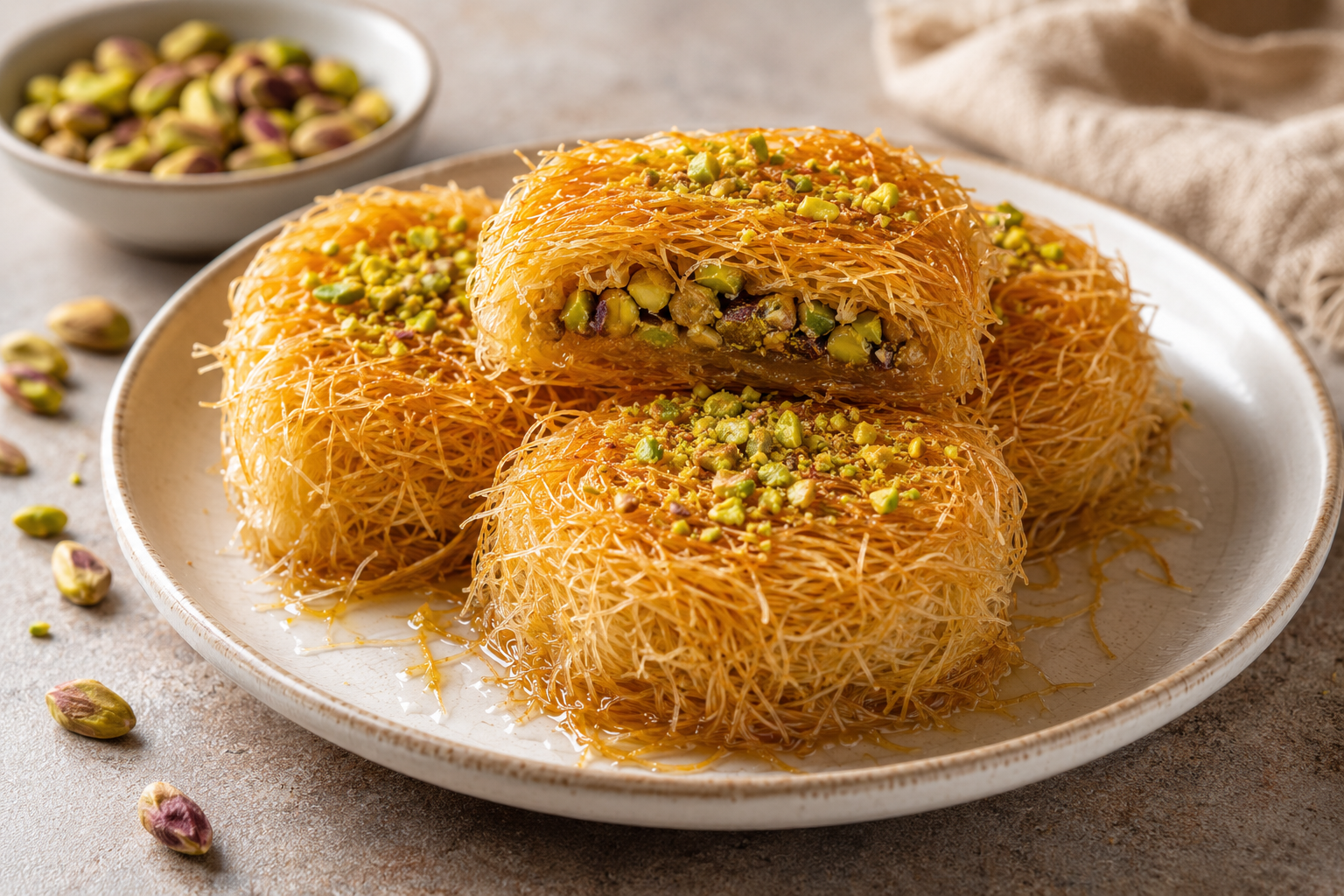
If you have ever enjoyed Middle Eastern, Greek, or Mediterranean desserts, there is a good chance you have come across kataifi. It is one of those ingredients that looks unusual at first but becomes incredibly appealing once you understand how it is made and used. With its fine, thread-like appearance and wonderfully crisp texture, it has become a favorite in traditional desserts as well as modern pastry recipes.
So, what is kataifi exactly? In simple terms, it is a type of pastry made from very thin strands of dough. These delicate strands are usually layered, wrapped, or shaped around ingredients such as nuts and then baked or cooked until golden and crisp. A sweet syrup or other flavorful topping is often added afterward, creating a dessert that combines crunch, richness, and sweetness.
Kataifi is especially popular across Greece, Turkey, the Levant, and other parts of the Eastern Mediterranean and Middle East. Although recipes differ from one region to another, the basic idea remains the same: extremely fine pastry strands are transformed into a delicious dish with plenty of texture and flavor. In this guide, we will explore what it is, where it comes from, how it is made, how it tastes, and the many ways you can enjoy it.
What Is Kataifi?
Kataifi is a shredded or thread-like pastry made from a simple dough mixture, commonly involving flour and water. Instead of being rolled into a conventional sheet like puff pastry or shortcrust pastry, the dough is formed into extremely thin strands. These strands resemble fine noodles or shredded wheat, which gives kataifi its distinctive appearance.
The pastry itself is relatively mild in flavor. Its real appeal comes from its texture and the ingredients used with it. When baked with butter or another fat, it strands become beautifully crisp and golden. When combined with nuts, spices, syrup, cream, or chocolate, the pastry provides a crunchy foundation that balances softer and richer ingredients.
The word kataifi can also refer to dishes prepared using these pastry strands, rather than only the raw pastry itself. Depending on the region and recipe, you may see it used in desserts filled with pistachios, walnuts, almonds, cheese, or cream. This flexibility is one of the reasons it has remained popular for generations.
Where Does Kataifi Come From?
Kataifi has deep roots in the culinary traditions of the Eastern Mediterranean and Middle East. It is commonly associated with Greek, Turkish, Arab, and Levantine cuisines, although similar styles of shredded pastry appear across several neighboring food cultures.
The history of kataifi is closely connected with the long tradition of layered and syrup-soaked pastries in the region. Many famous desserts, including baklava and related pastries, share ingredients such as nuts, butter, spices, and sweet syrup. Over time, different communities developed their own methods of preparing and serving these ingredients.
Because food traditions have traveled across borders for centuries, it can be difficult to assign it to a single modern country. Different regions have their own names, techniques, fillings, and presentation styles. Rather than belonging exclusively to one cuisine, it is better understood as part of a broad culinary heritage shared across the Mediterranean and Middle Eastern regions.
What Does Kataifi Taste Like?
On its own, kataifi pastry has a fairly neutral and slightly wheaty taste. It is not particularly sweet before other ingredients are added. This makes it a useful base for recipes because it can absorb and complement stronger flavors without overpowering them.
The most noticeable characteristic of kataifi is its texture. Properly baked it becomes crisp and delicate, creating a satisfying crunch with every bite. The thin strands also allow butter, syrup, and other flavors to reach different parts of the pastry, giving the finished dessert a rich and layered character.
The final flavor depends heavily on the recipe. A traditional nut-filled kataifi can taste buttery, nutty, fragrant, and sweet, while a modern chocolate version may be richer and more indulgent. Recipes containing cheese or cream can offer a pleasant contrast between crunchy pastry and a soft, creamy center.
How Is Kataifi Pastry Made?
Making kataifi pastry requires a different technique from making ordinary pastry dough. A relatively thin batter is prepared and then transformed into extremely fine strands. Traditionally, the strands were created using specialized methods that allowed the dough to fall in delicate threads onto a heated surface.
Commercial production uses more controlled equipment to create consistent strands. The finished pastry is typically collected and packaged so that cooks can use it directly in recipes. Fresh and frozen versions are available in many markets, although availability depends on location.
For home cooks, packaged kataifi pastry is usually the easiest option. It can be separated gently by hand before use. This step is important because the strands may stick together during storage, and separating them helps ensure that the pastry cooks evenly and develops a crisp texture.
What Ingredients Are Commonly Used With Kataifi?
Nuts are among the most traditional ingredients used with kataifi. Pistachios, walnuts, almonds, and hazelnuts can all work beautifully. The nuts add richness and texture while also providing a contrast to the delicate pastry strands.
Butter or clarified butter is another important ingredient. It helps the strands brown during baking and gives the finished dessert a richer taste. Some recipes use other fats depending on local traditions or dietary preferences, but the goal is generally the same: encourage the pastry to become crisp and golden.
Sweet syrup is also frequently used. A syrup made with sugar, water, and sometimes lemon juice is poured over the baked pastry, allowing it to soak into the strands while preserving some of their crispness. Rose water, orange blossom water, cinnamon, and other aromatic ingredients may also be added to create a distinctive fragrance.
Kataifi vs. Baklava: What Is the Difference?
Kataifi and baklava are often mentioned together because they belong to the same general family of rich, nut-filled pastries. Both can involve butter, nuts, spices, and sweet syrup, but their pastry structures are quite different.
Traditional baklava is usually made with thin sheets of phyllo dough layered with butter and fillings. Kataifi, on the other hand, uses fine strands of pastry. This difference gives the two desserts noticeably different textures even when their flavors are similar.
Baklava tends to have a layered, flaky structure, while kataifi has a more shredded and crunchy texture. Neither is necessarily better than the other. The choice mostly comes down to personal preference and the type of texture you enjoy in a dessert.
Popular Kataifi Desserts
One of the best-known ways to prepare kataifi is to combine it with chopped nuts and syrup. The pastry is arranged around or over the filling, brushed generously with butter, and baked until golden. Once it comes out of the oven, fragrant syrup is added, creating a rich and crunchy dessert.
Another popular approach involves rolling or shaping kataifi strands around a filling. This method creates attractive individual portions that can be served at celebrations, family gatherings, or special meals. Pistachios are particularly popular because their color and flavor work beautifully with the golden pastry.
Kataifi can also be incorporated into contemporary desserts. Modern pastry chefs use it with chocolate, ice cream, whipped cream, fruit, caramel, and other ingredients. These combinations demonstrate that kataifi does not have to remain limited to traditional recipes.
How to Cook Kataifi at Home
Cooking kataifi at home is easier than its unusual appearance might suggest. If you are using packaged pastry, the first step is usually to allow it to thaw properly if it has been frozen. Once softened, the strands should be gently separated without crushing them.
The pastry can then be arranged according to the recipe. It may be layered into a baking dish, shaped into nests, wrapped around a filling, or formed into individual pieces. Butter or another suitable fat is usually distributed throughout the strands to encourage even browning.
Baking temperatures and times vary depending on the recipe, but the main visual clue is color. Kataifi should generally become golden and crisp rather than remaining pale and soft. If syrup is part of the recipe, it is often added after baking so that the pastry absorbs the sweetness while retaining some of its characteristic crunch.
Tips for Getting Crispy Kataifi
One of the most important tips is to handle the pastry gently. The strands are delicate, and compressing them too much can result in a dense final texture. Loosening the strands before assembling the dessert helps create air pockets that contribute to crispness.
Another key factor is the distribution of butter or fat. Dry sections may remain pale and less flavorful, while excessively saturated sections can become heavy. Taking time to distribute the butter evenly can make a noticeable difference in the final result.
Syrup also needs to be handled carefully. Adding too much syrup can make the pastry overly soft, while too little may leave it dry. The ideal amount depends on the recipe, but the goal is usually to create a dessert that is moist and flavorful without completely losing the crisp texture that makes kataifi special.
Is Kataifi Sweet or Savory?
Although kataifi is most famous as a dessert pastry, it does not have to be sweet. The pastry itself is relatively neutral, which means it can work with savory ingredients as well.
Savory versions may include cheese, herbs, vegetables, or meat. Cheese-filled kataifi is particularly interesting because the crispy strands provide a contrast to the soft and creamy filling. Such recipes can be served as appetizers, snacks, or side dishes.
This versatility makes kataifi useful beyond traditional dessert recipes. Once you understand how the pastry behaves when baked, you can experiment with different fillings and seasonings. The same crunchy texture that works with syrup and pistachios can also complement savory ingredients.
How Should Kataifi Be Stored?
Uncooked kataifi pastry is often sold refrigerated or frozen, depending on the manufacturer and market. Storage instructions should always be checked on the package because different products can have different requirements.
If you are working with frozen kataifi, thawing it correctly is important. Rapid or improper thawing can affect the texture and make the strands more difficult to separate. Following the manufacturer’s instructions is generally the safest approach.
Once prepared, kataifi desserts are best stored according to their specific recipe. Syrup-soaked desserts can gradually become softer over time, while dry baked versions may maintain their crunch for longer. Keeping leftovers in an appropriate airtight container can help preserve their quality.
Why Has Kataifi Become So Popular?
Kataifi has always had a strong place in traditional cuisine, but it has gained additional attention because of modern food trends. Social media has made visually interesting desserts much more popular, and the fine golden strands of kataifi create an instantly recognizable appearance.
Its texture is another reason for its popularity. Modern desserts often combine contrasting textures, such as creamy fillings with crunchy toppings. Kataifi naturally provides this contrast, making it an excellent ingredient for creative pastry dishes.
There is also a growing interest in traditional foods from different parts of the world. As people explore Middle Eastern, Mediterranean, and Greek cuisines, ingredients such as kataifi are becoming easier to find and more familiar to home cooks outside their traditional regions.
Final Thoughts: Why Kataifi Is Worth Trying
So, what is kataifi? It is a delicate, thread-like pastry with a long culinary history and an impressive ability to turn simple ingredients into something special. Its crisp texture, neutral pastry flavor, and compatibility with nuts, syrup, cheese, cream, chocolate, and other ingredients make it remarkably versatile.
Whether you discover it in a traditional Mediterranean dessert or try making it at home, kataifi offers a different experience from ordinary pastry. Its fine strands create a distinctive crunch that is difficult to reproduce with conventional dough.
If you enjoy desserts with contrasting textures and rich flavors, kataifi is definitely worth exploring. Start with a classic nut-and-syrup recipe, learn how the pastry behaves in the oven, and then experiment with your own combinations. Once you understand the basics, this unusual-looking pastry becomes surprisingly easy—and very enjoyable—to work with.