


Introduction
Interior design continues to evolve as homeowners look for spaces that combine beauty, comfort, and functionality. The latest interior design trends focus on creating homes that not only look stylish but also improve everyday living. Instead of following short-lived fads, today’s designs embrace timeless materials, sustainable choices, and practical layouts that reflect modern lifestyles.
Whether you’re planning a complete home renovation or simply refreshing a single room, understanding current interior design trends can help you make smarter decorating decisions. From warm color palettes and natural materials to smart technology and multifunctional furniture, today’s interiors prioritize both aesthetics and usability.
In this guide, we’ll explore the most popular interior design trends shaping homes today. These expert insights will help you create elegant spaces that remain attractive and functional for years to come.
Why Interior Design Trends Matter
Following interior design trends doesn’t mean copying every new style that appears online. Instead, trends provide inspiration while helping homeowners discover practical ideas that improve the comfort and functionality of their living spaces.
Modern homes serve many purposes. They function as offices, entertainment areas, relaxation spaces, and family gathering places. Because of these changing needs, interior design now focuses on flexibility, organization, and comfort rather than decoration alone.
Well-designed interiors also increase property value. Buyers are naturally drawn to homes with updated layouts, quality finishes, and timeless styling. Even small improvements inspired by current interior design trends can make a significant difference when selling a home.
Natural Materials Continue to Dominate
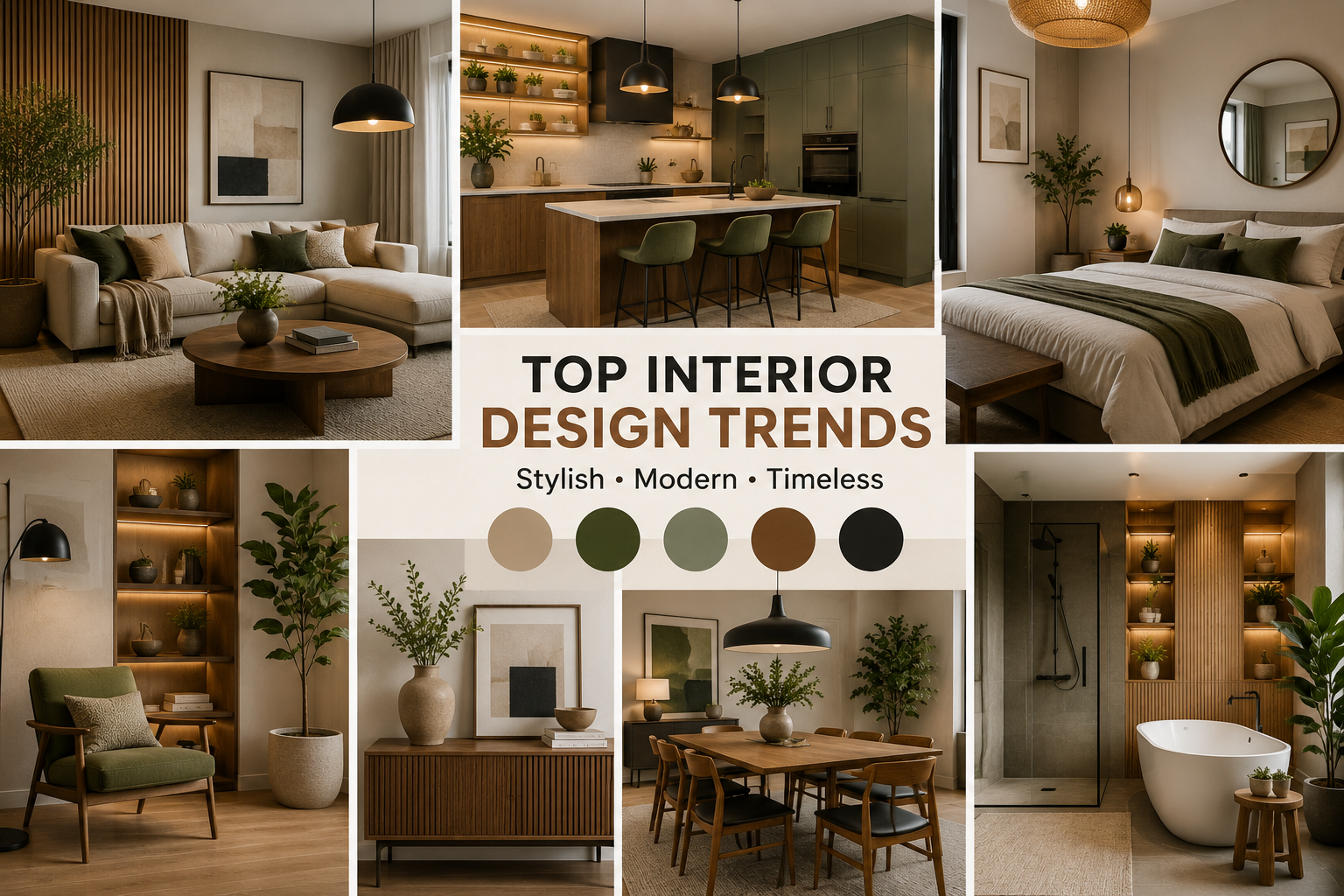
One of the strongest interior design trends is the growing use of natural materials throughout the home. Wood, stone, linen, cotton, bamboo, and rattan create warm, inviting environments that feel timeless and relaxing.
Natural wood flooring remains a favorite because it complements nearly every decorating style. Whether you prefer light oak, walnut, or reclaimed wood, these materials introduce warmth while maintaining long-lasting durability.
Stone countertops, textured wall finishes, woven baskets, and handcrafted furniture also contribute to a more organic appearance. Combining multiple natural textures creates depth without overwhelming the room.
These materials not only improve aesthetics but also support sustainable design practices when responsibly sourced.
Warm Neutral Color Palettes
Color trends have shifted away from stark white interiors toward warmer, softer tones that create cozy living spaces. Beige, cream, taupe, soft gray, sand, and warm white are becoming increasingly popular.
These neutral shades provide a calming backdrop while allowing furniture, artwork, and decorative accessories to stand out naturally. Unlike bold colors that may quickly feel outdated, warm neutrals remain elegant for many years.
Homeowners seeking additional personality often introduce earthy accent colors such as terracotta, olive green, rust, deep navy, and muted charcoal. These tones complement natural materials while adding richness to the overall design.
Maintaining a consistent color palette throughout the home also creates a seamless flow from one room to another.
Multi-Functional Furniture for Modern Living
As homes become more versatile, furniture must serve multiple purposes. One of today’s most practical interior design trends is choosing pieces that maximize both comfort and efficiency.
Storage ottomans, modular sofas, extendable dining tables, Murphy beds, and coffee tables with hidden compartments help homeowners make the most of available space. These solutions are especially valuable in apartments and smaller homes.
Flexible furniture also adapts to changing lifestyles. A dining table can become a workspace during the day, while modular seating allows homeowners to rearrange living rooms for entertaining or relaxing.
Investing in quality multifunctional furniture reduces clutter while improving the overall organization of your home.
Sustainable Interior Design
Sustainability has become one of the most influential trends in interior design. More homeowners now prioritize environmentally responsible materials, energy efficiency, and long-lasting products.
Choosing furniture made from reclaimed wood, recycled materials, or certified sustainable timber helps reduce environmental impact. Vintage and secondhand furniture also continues to gain popularity because it combines character with sustainability.
Energy-efficient lighting, smart thermostats, insulated windows, and eco-friendly paints contribute to healthier homes while lowering monthly utility costs. These improvements benefit both homeowners and the environment. interior design trends
Rather than replacing furniture frequently, many people now focus on investing in timeless pieces that remain functional for decades.
Smart Home Technology Integration
Technology has become an essential element of modern interiors. Smart homes are no longer limited to luxury properties, making this one of the fastest-growing interior design trends.
Voice-controlled lighting, automated blinds, smart security systems, wireless charging stations, and intelligent climate control improve convenience while maintaining clean, uncluttered spaces. Technology now blends seamlessly into interior design instead of dominating it.
Hidden cable management systems and built-in charging solutions also help maintain organized rooms free from visible wires and unnecessary electronics. interior design trends
As smart home technology continues evolving, homeowners can enjoy greater comfort, improved security, and enhanced energy efficiency.
Statement Lighting as a Design Feature
Lighting has evolved beyond simple functionality. Today’s interiors use lighting fixtures as decorative focal points that enhance the overall character of a room.
Oversized pendant lights above dining tables, sculptural chandeliers, wall sconces, and modern floor lamps introduce visual interest while providing practical illumination. Designers increasingly combine multiple lighting sources to create depth and flexibility.
Layered lighting includes ambient lighting for overall brightness, task lighting for specific activities, and accent lighting that highlights artwork or architectural features. This combination creates a warm, welcoming atmosphere throughout the home.
Natural light remains equally important. Large windows, skylights, and glass doors make interiors feel brighter, larger, and more connected to the outdoors. interior design trends
Bringing Nature Indoors
Biophilic design continues to influence modern interiors by strengthening the connection between indoor and outdoor environments. This trend focuses on creating healthier living spaces inspired by nature.
Indoor plants remain one of the easiest ways to embrace this style. Popular options such as fiddle-leaf figs, snake plants, monstera, pothos, and peace lilies add color while improving the overall atmosphere.
Natural textures, water features, indoor gardens, and large windows overlooking outdoor landscapes further strengthen this connection. Even simple additions like wooden furniture and woven textiles contribute to a calming environment.
Homes designed with nature in mind often feel more relaxing, comfortable, and visually balanced. interior design trends
Personalized Spaces Over Temporary Trends
One of the most refreshing interior design trends is the shift toward personalization. Instead of copying identical designs from social media, homeowners increasingly focus on creating spaces that reflect their individual tastes and experiences.
Artwork collected during travel, family heirlooms, handmade furniture, vintage accessories, and custom shelving all contribute to unique interiors with genuine character. These personal touches make a house feel like a true home.
Mixing different design styles has also become more acceptable. Contemporary furniture can blend beautifully with antique pieces, while industrial elements often complement traditional architecture.
Personalized interiors remain timeless because they reflect the people who live there rather than temporary decorating trends.
Common Interior Design Mistakes to Avoid
Even the most beautiful furniture and accessories cannot compensate for poor planning. Avoiding common design mistakes helps create balanced, comfortable, and functional interiors.
One of the biggest mistakes is overcrowding rooms with excessive furniture or decorative items. Leaving enough open space improves movement while allowing each design element to stand out.
Poor lighting is another frequent issue. Relying on a single ceiling fixture creates harsh shadows and limits flexibility. Layered lighting always produces a more welcoming atmosphere.
Ignoring scale and proportion can also disrupt a room’s appearance. Oversized furniture overwhelms small spaces, while tiny accessories may appear disconnected in larger rooms. Careful planning ensures every element feels balanced.
Budget-Friendly Ways to Follow Interior Design Trends
Updating your home’s interior doesn’t require a complete renovation. Many affordable improvements can significantly refresh your living space without exceeding your budget.
Painting walls in modern neutral shades provides an instant transformation. Replacing outdated light fixtures, cabinet hardware, curtains, or decorative pillows also creates noticeable improvements at a relatively low cost.
Adding indoor plants, rearranging furniture, updating artwork, or incorporating stylish storage baskets helps modernize interiors while maintaining affordability. Small decorative changes often produce surprisingly dramatic results.
Shopping at thrift stores, antique markets, and online marketplaces can uncover unique furniture pieces that add personality without the high price of brand-new items.
Final Thoughts
The latest interior design trends focus on creating homes that are comfortable, practical, and visually timeless. Rather than chasing every passing trend, today’s homeowners are embracing natural materials, sustainable choices, multifunctional furniture, warm color palettes, and personalized interiors that reflect their unique lifestyles.
Whether you’re redesigning an entire home or updating a single room, thoughtful planning remains the key to success. Prioritize quality materials, functional layouts, balanced lighting, and meaningful decorative elements that will continue serving your needs for years to come.
Ultimately, the best interior design isn’t about following trends perfectly—it’s about creating spaces where you genuinely enjoy spending time. By combining timeless design principles with modern innovations, you can build a home that feels welcoming, stylish, and functional every day.